
In this guide, you’ll discover the best practices for designing high-converting landing pages and learn how to build pages that turn visitors into customers. You’ll also explore the key elements successful businesses use to improve user experience and increase sales.
Anyone can build a landing page…
But not every landing page delivers results.
The real difference between an average page and one that generates sales lies in its design, user experience, and conversion optimization strategy.
That is why successful companies rely on proven principles and best practices that make landing pages more effective at capturing attention and converting visitors into customers.
If you want to understand the fundamentals first, you can explore What Are Landing Pages and How Do They Work? before diving deeper into optimization techniques.
What Are High-Converting Landing Pages?
High-converting landing pages are designed with a single objective in mind: encouraging users to take a specific action, such as:
- Purchasing a product
- Registering for a service
- Booking an appointment
- Submitting contact information
Every element on the page serves a purpose and contributes to achieving that objective.
Why Do Some Landing Pages Fail Despite Having Beautiful Designs?
One of the most common mistakes is focusing only on visual appearance.
A page may look attractive, but it can still be:
- Unclear
- Slow-loading
- Filled with distractions
Conversion optimization depends on user experience, not aesthetics alone.
You can learn more about common mistakes in our guide on Landing Page Mistakes That Reduce Sales.
Best Practices for Designing High-Converting Landing Pages
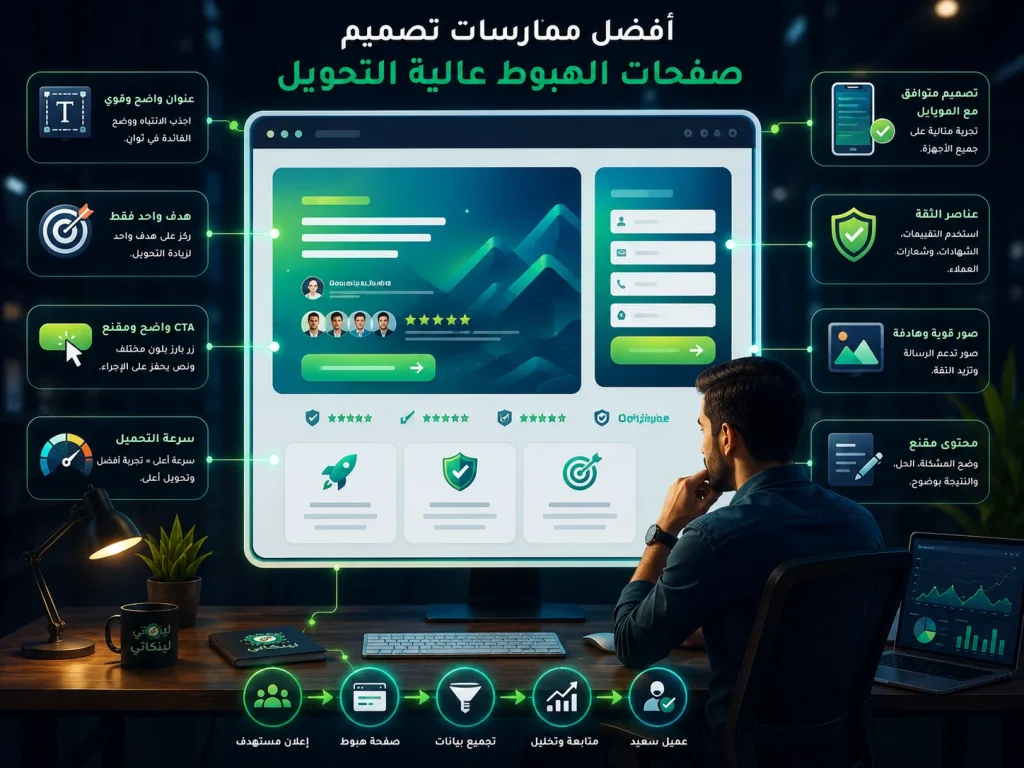
Use a Clear and Compelling Headline
Your headline is the first thing visitors see.
If users cannot immediately understand:
- What you offer
- Why it benefits them
They will likely leave the page.
A strong headline should be:
- Clear
- Direct
- Focused on outcomes
Focus on One Goal Only
One of the core principles of successful landing pages is:
One Page = One Goal
Whether your objective is:
- Selling a product
- Generating leads
- Collecting information
Adding multiple goals often reduces conversion rates.
Use a Strong and Persuasive CTA
Your call-to-action button should be:
- Highly visible
- Easy to understand
- Persuasive
Examples include:
- Get Started Today
- Book Your Consultation
- Request a Quote
Eliminate Distractions
Any unnecessary element on the page can reduce focus, including:
- Excessive navigation menus
- Multiple competing links
- Information unrelated to the main objective
Professional landing pages prioritize simplicity and clarity.
Improve Page Speed
Loading speed plays a critical role in landing page performance.
Slow pages often lead to:
- Higher bounce rates
- Lower conversions
- Poor user experiences
Design for Mobile Users
Most visitors browse from smartphones.
Landing pages should therefore be:
- Fast-loading
- Easy to read
- Mobile-friendly
- Simple to navigate
Add Trust Elements
Visitors need reassurance before taking action.
Successful landing pages often include:
- Customer testimonials
- Real results
- Company logos
- Portfolio examples
You can see practical implementations of these elements in our Landing Page Portfolio Examples.
Create Persuasive Marketing Content
Landing page content should clearly communicate:
- The problem
- The solution
- The value proposition
- The expected outcome
Strong copywriting can often be more influential than design itself.
Use Images That Support Your Goal
Images should never serve as decoration alone.
Effective visuals should:
- Reinforce the message
- Direct user attention
- Encourage conversions
Professional landing pages use purposeful imagery rather than random graphics.
Build a Simple Funnel Within the Page
High-converting landing pages are usually part of a broader funnel, such as:
Advertisement
↓
Landing Page
↓
Lead Capture
↓
CRM Follow-Up
↓
Conversion Into Sales
This structure significantly improves marketing efficiency.
How Can You Increase Landing Page Conversion Rates?
Conversion optimization typically depends on:
- User experience
- CTA strategy
- Website speed
- Marketing content
- Trust-building elements
For deeper insights, read our guide on How to Increase Landing Page Conversion Rates.
Do Best Practices Differ Based on Landing Page Type?
Absolutely.
Product sales pages differ from lead generation pages, appointment booking pages, and registration pages.
Understanding the various Types of Landing Pages helps businesses choose the right design approach for their goals.
How Lenkaate Helps Businesses Build High-Converting Landing Pages
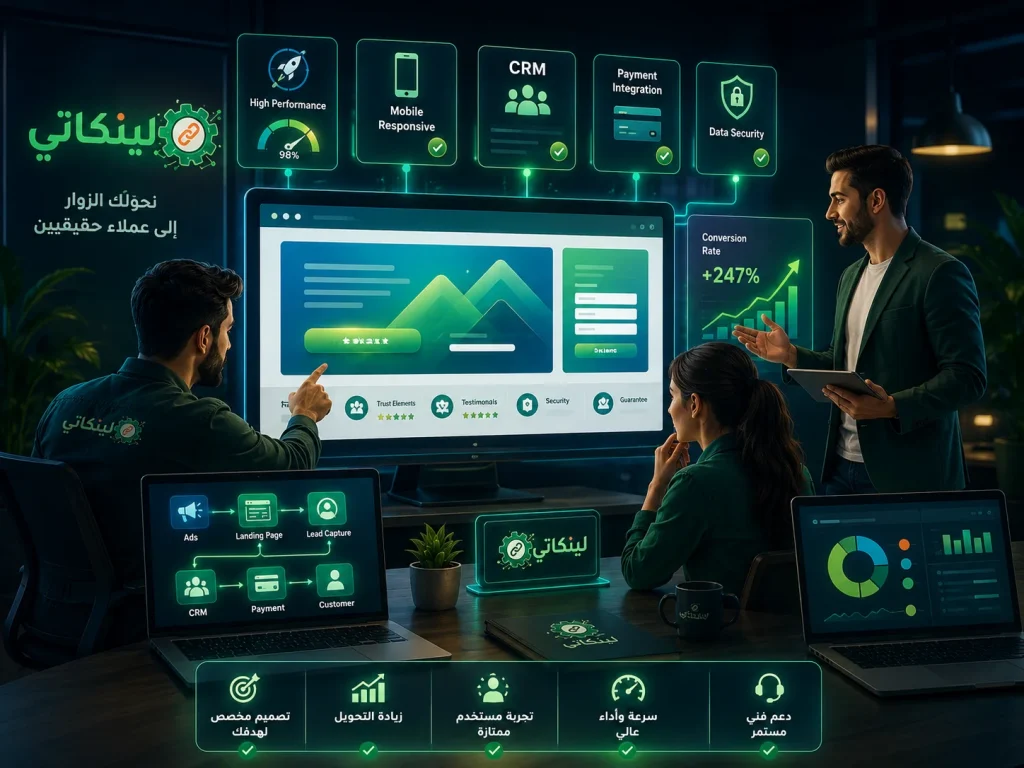
Visual showing Lenkaate’s process for building landing pages with CRM integrations, payment systems, and performance tracking.
At Lenkaate, we focus on more than aesthetics—we build landing pages that deliver measurable business results.
Our process includes:
- User experience optimization
- Funnel development
- CRM integrations
- Lead management systems
- Payment gateway integration
- Performance and speed optimization
All of this is included within our Web Development Services, designed to transform visitors into paying customers.
If you’re looking to build a landing page that delivers real business outcomes rather than simply looking attractive, you can request a free consultation to discover the best solution for your project.
Frequently Asked Questions
What Is the Most Important Element of a Landing Page?
A compelling headline combined with a strong call-to-action.
Is Design Alone Enough?
No. Conversion performance also depends on content quality and user experience.
Do Landing Pages Vary by Industry?
Yes. Every industry requires a different presentation and conversion strategy.
Does Page Speed Affect Conversions?
Absolutely. Slow-loading pages can significantly reduce sales and lead generation.
Conclusion
The success of landing pages is not determined by visual design alone.
It depends on creating a complete experience that guides users toward making decisions with confidence and ease.
Implementing proven best practices can transform a landing page from a simple design into a powerful tool for increasing sales, leads, and business growth.